Industrial Portfolio Optimization & Brand Repositioning
Industrial Portfolio Optimization & Brand Repositioning
Operational reorganization and strategic repositioning for Grupo Gallo: industrial portfolio optimization, revenue diversification into high-margin categories, and brand rejuvenation targeting Gen Z through the "Foodcore" trend

The brand Gallo
The brand’s history and heritage, spanning 78 years in the market, represent one of its strongest resources. It is valuable because it builds trust, highly rare, and completely inimitable, no competitor can manufacture nearly eight decades of history or the brand’s proprietary recipes. Nor is it substitutable. For these reasons, I consider this to be one of Gallo’s most solid pillars for sustaining a competitive advantage over time.
Reputation and brand equity are also critical internal resources. The brand is deeply embedded in the Spanish collective imagination, making this both valuable and rare. Furthermore, it is non-transferable and extremely difficult to imitate. This means it directly contributes to a sustainable competitive advantage, though its success depends on maintaining consistency between what the brand actually does and how it communicates.
Market segmentation and niche product development, such as vegan options or the gluten-free market,is a valuable resource because it allows the company to target specific consumer groups. It is not strictly rare, as competitors also segment the market, but in Gallo's case, the differentiator lies in the industrial capacity that powers this segmentation. While concept-wise it can be imitated, doing so is far from easy without the appropriate technology or dedicated facilities. Therefore, it generates a real competitive advantage, albeit less sustainable long-term than its history or reputation.
Overall, many of Gallo’s resources meet the VRIO criteria for a sustainable competitive advantage: they are valuable, rare, inimitable, and non-transferable. However, to maintain this advantage over time, the brand must improve its communication strategy, particularly toward younger consumers, who currently do not clearly perceive its innovations or sustainability efforts.
Executive Summary & Methodology
STRATEGIC TRANSFORMATION PROJECT: GRUPO GALLO
This project outlines the operational reorganization and strategic repositioning plan for Grupo Gallo, the leading pasta brand in Spain with a 48.6% market share. Addressing a critical brand cognitive dissonancethe gap between Gallo's real industrial/sustainability capabilities and the perception held by younger consumers—he project defines a strategic roadmap focused on three core pillars:
Operational Streamlining: Definitively closing the low-margin flat dry pasta line (underperforming products).
Revenue Diversification: Launching the Gallo Picante × Valentina product line to capture high-margin growth in the seasonings segment.
Brand Rejuvenation: Executing a high-impact cross-branding campaign framed around the Foodcore macro trend (Gallo × Loewe).
To ensure analytical rigor, the project integrates three business frameworks:
VRIO Framework: Assessing internal resources and capabilities to build sustainable competitive advantages against direct rivals (e.g., Barilla) and private label brands.
Revised SWOT Analysis: Diagnosing internal and external factors following the identification of the perceptual brand gap.
Empirical Validation: Quantitative consumer research conducted to validate the cognitive dissonance hypothesis and eliminate confirmation bias.
What Next?

Strategic Diagnosis (SWOT & VRIO Analysis) Consolidated SWOT Matrix
Strengths: Market leadership (48.6% share), 4 owned manufacturing plants in Spain (including the dedicated Gluten-Free facility in Esparreguera with a 37.2% category share), 78 years of brand equity, and real agricultural sustainability initiatives with the University of Córdoba (UCO).
Weaknesses: Cognitive dissonance regarding brand values, loss of relevance among consumers under 35 (Gen Z / Millennials), legacy digital capabilities, and aggressive price promotions that erode premium perception.
Opportunities: Expansion of the Gluten-Free segment (~17-18% annual growth), rising domestic pasta consumption, E-commerce/Quick-commerce adoption, and leveraging the Foodcore lifestyle trend.
Threats: Aggressive market share capture strategies by Barilla, rising private label market share (+20-25%), retail buyer power, and raw material inflation.

Now...
Strategic Proposals
Proposal 1: Related Diversification "Gallo Picante" × Valentina
This initiative proposes launching Gallo Picante, a new hot sauce line developed in collaboration with Salsa Valentina to capitalize on the growing consumer demand for bold flavors and the expansion of the seasonings market. This represents a related diversification strategy, as it expands Gallo’s presence within the same culinary ecosystem while leveraging existing organizational assets, including production facilities, distribution networks, and brand trust.
Strategic Fit & Feasibility: Aligns with core objectives to enter higher value-added categories and attract younger demographics. It requires minimal CAPEX by utilizing existing plants, and the partnership with Valentina enables a rapid go-to-market execution supported by internal R&D, quality control, and marketing teams.
Financial Impact: Strong potential ROI driven by low incremental costs and lower price elasticity within the hot sauce segment.
Market Opportunity: Targets a rapidly growing sector projected to expand at a 7.18% CAGR, growing from $655.18M in 2024 to $1,134.81M by 2032.
Risk Profile: Controlled across all fronts—demand risk is mitigated by market growth, brand risk is managed through Valentina’s credibility, and financial/operational risks remain minimal due to low CAPEX and existing internal capabilities.
Proposal 2: Premium Repositioning "Gallo × Loewe" (Foodcore Trend)
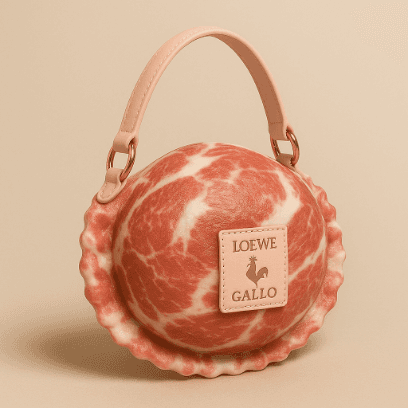
The second strategy leverages Gallo’s intangible assetsits 78-year heritage, brand equity, and cultural identity—to reposition the brand into a premium tier through a high-profile cross-branding collaboration with luxury fashion house Loewe.
Strategic Fit & Feasibility: Addresses Gallo’s primary strategic vulnerability: a lack of emotional differentiation against competitors like Barilla and private-label brands. It is highly feasible and carries low financial risk, as product design relies on Loewe while Gallo contributes brand heritage and media reach without altering operational conditions or mass-market pricing.
Market Opportunity ("Foodcore"): Capitalizes on the macro trend where food has transformed into a luxury status symbol and cultural desire. As seen with luxury houses (Prada, Dior, Chanel) and lifestyle trends (glazed donut, latte makeup, Pantone’s Mocha Mousse), gastronomy is now an aspirational medium.
VRIO Value Creation: Shifts social media conversations from functional comparisons with Italian pasta toward design, prestige, and innovation. This builds brand love, engages Gen Z and Millennials, and creates an inimitable, sustainable competitive advantage rooted in storytelling and cultural prestige.
Personal Strategic Reflection: Trend Foresight & Real-World Validation
On a personal note, this project originated from a strong strategic intuition I had early on: that gastronomy and fashion were converging into a unified cultural phenomenon where food functions as a symbol of luxury, aesthetics, and identity.
To explore this concept, I initially designed a series of visual prototypes showcasing how a traditional food brand like Gallo could intersect with high-fashion codes. Shortly after, this vision was validated by the industry when Loewe launched its Shell Bucket and woven leather collection, featuring intricate leatherwork designed to mirror the textures, mesh, and organic shapes of Spanish and Mediterranean culinary motifs.
Seeing a global luxury house translate traditional gastronomy and Mediterranean market culture into iconic high-fashion accessories proved that the "Foodcore" hypothesis was not just theoretical, but an active, high-value macro trend. This real-world alignment confirmed that bridging Gallo’s 78 year old Spanish legacy with luxury design is a powerful, viable pathway to building an inimitable competitive advantage.

Industrial Portfolio Optimization & Brand Repositioning
Industrial Portfolio Optimization & Brand Repositioning
Operational reorganization and strategic repositioning for Grupo Gallo: industrial portfolio optimization, revenue diversification into high-margin categories, and brand rejuvenation targeting Gen Z through the "Foodcore" trend
The brand Gallo
The brand’s history and heritage, spanning 78 years in the market, represent one of its strongest resources. It is valuable because it builds trust, highly rare, and completely inimitable, no competitor can manufacture nearly eight decades of history or the brand’s proprietary recipes. Nor is it substitutable. For these reasons, I consider this to be one of Gallo’s most solid pillars for sustaining a competitive advantage over time.
Reputation and brand equity are also critical internal resources. The brand is deeply embedded in the Spanish collective imagination, making this both valuable and rare. Furthermore, it is non-transferable and extremely difficult to imitate. This means it directly contributes to a sustainable competitive advantage, though its success depends on maintaining consistency between what the brand actually does and how it communicates.
Market segmentation and niche product development, such as vegan options or the gluten-free market,is a valuable resource because it allows the company to target specific consumer groups. It is not strictly rare, as competitors also segment the market, but in Gallo's case, the differentiator lies in the industrial capacity that powers this segmentation. While concept-wise it can be imitated, doing so is far from easy without the appropriate technology or dedicated facilities. Therefore, it generates a real competitive advantage, albeit less sustainable long-term than its history or reputation.
Overall, many of Gallo’s resources meet the VRIO criteria for a sustainable competitive advantage: they are valuable, rare, inimitable, and non-transferable. However, to maintain this advantage over time, the brand must improve its communication strategy, particularly toward younger consumers, who currently do not clearly perceive its innovations or sustainability efforts.
Executive Summary & Methodology
STRATEGIC TRANSFORMATION PROJECT: GRUPO GALLO
This project outlines the operational reorganization and strategic repositioning plan for Grupo Gallo, the leading pasta brand in Spain with a 48.6% market share. Addressing a critical brand cognitive dissonancethe gap between Gallo's real industrial/sustainability capabilities and the perception held by younger consumers—he project defines a strategic roadmap focused on three core pillars:
Operational Streamlining: Definitively closing the low-margin flat dry pasta line (underperforming products).
Revenue Diversification: Launching the Gallo Picante × Valentina product line to capture high-margin growth in the seasonings segment.
Brand Rejuvenation: Executing a high-impact cross-branding campaign framed around the Foodcore macro trend (Gallo × Loewe).
To ensure analytical rigor, the project integrates three business frameworks:
VRIO Framework: Assessing internal resources and capabilities to build sustainable competitive advantages against direct rivals (e.g., Barilla) and private label brands.
Revised SWOT Analysis: Diagnosing internal and external factors following the identification of the perceptual brand gap.
Empirical Validation: Quantitative consumer research conducted to validate the cognitive dissonance hypothesis and eliminate confirmation bias.
What Next?
Strategic Diagnosis (SWOT & VRIO Analysis) Consolidated SWOT Matrix
Strengths: Market leadership (48.6% share), 4 owned manufacturing plants in Spain (including the dedicated Gluten-Free facility in Esparreguera with a 37.2% category share), 78 years of brand equity, and real agricultural sustainability initiatives with the University of Córdoba (UCO).
Weaknesses: Cognitive dissonance regarding brand values, loss of relevance among consumers under 35 (Gen Z / Millennials), legacy digital capabilities, and aggressive price promotions that erode premium perception.
Opportunities: Expansion of the Gluten-Free segment (~17-18% annual growth), rising domestic pasta consumption, E-commerce/Quick-commerce adoption, and leveraging the Foodcore lifestyle trend.
Threats: Aggressive market share capture strategies by Barilla, rising private label market share (+20-25%), retail buyer power, and raw material inflation.
Now...
Strategic Proposals
Proposal 1: Related Diversification "Gallo Picante" × Valentina
This initiative proposes launching Gallo Picante, a new hot sauce line developed in collaboration with Salsa Valentina to capitalize on the growing consumer demand for bold flavors and the expansion of the seasonings market. This represents a related diversification strategy, as it expands Gallo’s presence within the same culinary ecosystem while leveraging existing organizational assets, including production facilities, distribution networks, and brand trust.
Strategic Fit & Feasibility: Aligns with core objectives to enter higher value-added categories and attract younger demographics. It requires minimal CAPEX by utilizing existing plants, and the partnership with Valentina enables a rapid go-to-market execution supported by internal R&D, quality control, and marketing teams.
Financial Impact: Strong potential ROI driven by low incremental costs and lower price elasticity within the hot sauce segment.
Market Opportunity: Targets a rapidly growing sector projected to expand at a 7.18% CAGR, growing from $655.18M in 2024 to $1,134.81M by 2032.
Risk Profile: Controlled across all fronts—demand risk is mitigated by market growth, brand risk is managed through Valentina’s credibility, and financial/operational risks remain minimal due to low CAPEX and existing internal capabilities.
Proposal 2: Premium Repositioning "Gallo × Loewe" (Foodcore Trend)
The second strategy leverages Gallo’s intangible assetsits 78-year heritage, brand equity, and cultural identity—to reposition the brand into a premium tier through a high-profile cross-branding collaboration with luxury fashion house Loewe.
Strategic Fit & Feasibility: Addresses Gallo’s primary strategic vulnerability: a lack of emotional differentiation against competitors like Barilla and private-label brands. It is highly feasible and carries low financial risk, as product design relies on Loewe while Gallo contributes brand heritage and media reach without altering operational conditions or mass-market pricing.
Market Opportunity ("Foodcore"): Capitalizes on the macro trend where food has transformed into a luxury status symbol and cultural desire. As seen with luxury houses (Prada, Dior, Chanel) and lifestyle trends (glazed donut, latte makeup, Pantone’s Mocha Mousse), gastronomy is now an aspirational medium.
VRIO Value Creation: Shifts social media conversations from functional comparisons with Italian pasta toward design, prestige, and innovation. This builds brand love, engages Gen Z and Millennials, and creates an inimitable, sustainable competitive advantage rooted in storytelling and cultural prestige.
Personal Strategic Reflection: Trend Foresight & Real-World Validation
On a personal note, this project originated from a strong strategic intuition I had early on: that gastronomy and fashion were converging into a unified cultural phenomenon where food functions as a symbol of luxury, aesthetics, and identity.
To explore this concept, I initially designed a series of visual prototypes showcasing how a traditional food brand like Gallo could intersect with high-fashion codes. Shortly after, this vision was validated by the industry when Loewe launched its Shell Bucket and woven leather collection, featuring intricate leatherwork designed to mirror the textures, mesh, and organic shapes of Spanish and Mediterranean culinary motifs.
Seeing a global luxury house translate traditional gastronomy and Mediterranean market culture into iconic high-fashion accessories proved that the "Foodcore" hypothesis was not just theoretical, but an active, high-value macro trend. This real-world alignment confirmed that bridging Gallo’s 78 year old Spanish legacy with luxury design is a powerful, viable pathway to building an inimitable competitive advantage.
Industrial Portfolio Optimization & Brand Repositioning
Industrial Portfolio Optimization & Brand Repositioning
Operational reorganization and strategic repositioning for Grupo Gallo: industrial portfolio optimization, revenue diversification into high-margin categories, and brand rejuvenation targeting Gen Z through the "Foodcore" trend
The brand Gallo
The brand’s history and heritage, spanning 78 years in the market, represent one of its strongest resources. It is valuable because it builds trust, highly rare, and completely inimitable, no competitor can manufacture nearly eight decades of history or the brand’s proprietary recipes. Nor is it substitutable. For these reasons, I consider this to be one of Gallo’s most solid pillars for sustaining a competitive advantage over time.
Reputation and brand equity are also critical internal resources. The brand is deeply embedded in the Spanish collective imagination, making this both valuable and rare. Furthermore, it is non-transferable and extremely difficult to imitate. This means it directly contributes to a sustainable competitive advantage, though its success depends on maintaining consistency between what the brand actually does and how it communicates.
Market segmentation and niche product development, such as vegan options or the gluten-free market,is a valuable resource because it allows the company to target specific consumer groups. It is not strictly rare, as competitors also segment the market, but in Gallo's case, the differentiator lies in the industrial capacity that powers this segmentation. While concept-wise it can be imitated, doing so is far from easy without the appropriate technology or dedicated facilities. Therefore, it generates a real competitive advantage, albeit less sustainable long-term than its history or reputation.
Overall, many of Gallo’s resources meet the VRIO criteria for a sustainable competitive advantage: they are valuable, rare, inimitable, and non-transferable. However, to maintain this advantage over time, the brand must improve its communication strategy, particularly toward younger consumers, who currently do not clearly perceive its innovations or sustainability efforts.
Executive Summary & Methodology
STRATEGIC TRANSFORMATION PROJECT: GRUPO GALLO
This project outlines the operational reorganization and strategic repositioning plan for Grupo Gallo, the leading pasta brand in Spain with a 48.6% market share. Addressing a critical brand cognitive dissonancethe gap between Gallo's real industrial/sustainability capabilities and the perception held by younger consumers—he project defines a strategic roadmap focused on three core pillars:
Operational Streamlining: Definitively closing the low-margin flat dry pasta line (underperforming products).
Revenue Diversification: Launching the Gallo Picante × Valentina product line to capture high-margin growth in the seasonings segment.
Brand Rejuvenation: Executing a high-impact cross-branding campaign framed around the Foodcore macro trend (Gallo × Loewe).
To ensure analytical rigor, the project integrates three business frameworks:
VRIO Framework: Assessing internal resources and capabilities to build sustainable competitive advantages against direct rivals (e.g., Barilla) and private label brands.
Revised SWOT Analysis: Diagnosing internal and external factors following the identification of the perceptual brand gap.
Empirical Validation: Quantitative consumer research conducted to validate the cognitive dissonance hypothesis and eliminate confirmation bias.
What Next?
Strategic Diagnosis (SWOT & VRIO Analysis) Consolidated SWOT Matrix
Strengths: Market leadership (48.6% share), 4 owned manufacturing plants in Spain (including the dedicated Gluten-Free facility in Esparreguera with a 37.2% category share), 78 years of brand equity, and real agricultural sustainability initiatives with the University of Córdoba (UCO).
Weaknesses: Cognitive dissonance regarding brand values, loss of relevance among consumers under 35 (Gen Z / Millennials), legacy digital capabilities, and aggressive price promotions that erode premium perception.
Opportunities: Expansion of the Gluten-Free segment (~17-18% annual growth), rising domestic pasta consumption, E-commerce/Quick-commerce adoption, and leveraging the Foodcore lifestyle trend.
Threats: Aggressive market share capture strategies by Barilla, rising private label market share (+20-25%), retail buyer power, and raw material inflation.
Now...
Strategic Proposals
Proposal 1: Related Diversification "Gallo Picante" × Valentina
This initiative proposes launching Gallo Picante, a new hot sauce line developed in collaboration with Salsa Valentina to capitalize on the growing consumer demand for bold flavors and the expansion of the seasonings market. This represents a related diversification strategy, as it expands Gallo’s presence within the same culinary ecosystem while leveraging existing organizational assets, including production facilities, distribution networks, and brand trust.
Strategic Fit & Feasibility: Aligns with core objectives to enter higher value-added categories and attract younger demographics. It requires minimal CAPEX by utilizing existing plants, and the partnership with Valentina enables a rapid go-to-market execution supported by internal R&D, quality control, and marketing teams.
Financial Impact: Strong potential ROI driven by low incremental costs and lower price elasticity within the hot sauce segment.
Market Opportunity: Targets a rapidly growing sector projected to expand at a 7.18% CAGR, growing from $655.18M in 2024 to $1,134.81M by 2032.
Risk Profile: Controlled across all fronts—demand risk is mitigated by market growth, brand risk is managed through Valentina’s credibility, and financial/operational risks remain minimal due to low CAPEX and existing internal capabilities.
Proposal 2: Premium Repositioning "Gallo × Loewe" (Foodcore Trend)
The second strategy leverages Gallo’s intangible assetsits 78-year heritage, brand equity, and cultural identity—to reposition the brand into a premium tier through a high-profile cross-branding collaboration with luxury fashion house Loewe.
Strategic Fit & Feasibility: Addresses Gallo’s primary strategic vulnerability: a lack of emotional differentiation against competitors like Barilla and private-label brands. It is highly feasible and carries low financial risk, as product design relies on Loewe while Gallo contributes brand heritage and media reach without altering operational conditions or mass-market pricing.
Market Opportunity ("Foodcore"): Capitalizes on the macro trend where food has transformed into a luxury status symbol and cultural desire. As seen with luxury houses (Prada, Dior, Chanel) and lifestyle trends (glazed donut, latte makeup, Pantone’s Mocha Mousse), gastronomy is now an aspirational medium.
VRIO Value Creation: Shifts social media conversations from functional comparisons with Italian pasta toward design, prestige, and innovation. This builds brand love, engages Gen Z and Millennials, and creates an inimitable, sustainable competitive advantage rooted in storytelling and cultural prestige.
Personal Strategic Reflection: Trend Foresight & Real-World Validation
On a personal note, this project originated from a strong strategic intuition I had early on: that gastronomy and fashion were converging into a unified cultural phenomenon where food functions as a symbol of luxury, aesthetics, and identity.
To explore this concept, I initially designed a series of visual prototypes showcasing how a traditional food brand like Gallo could intersect with high-fashion codes. Shortly after, this vision was validated by the industry when Loewe launched its Shell Bucket and woven leather collection, featuring intricate leatherwork designed to mirror the textures, mesh, and organic shapes of Spanish and Mediterranean culinary motifs.
Seeing a global luxury house translate traditional gastronomy and Mediterranean market culture into iconic high-fashion accessories proved that the "Foodcore" hypothesis was not just theoretical, but an active, high-value macro trend. This real-world alignment confirmed that bridging Gallo’s 78 year old Spanish legacy with luxury design is a powerful, viable pathway to building an inimitable competitive advantage.